
The story of A Little White Wire and How It Runs
Pay attention. This is going to get highly technical.
Ready? Okay. Here goes. The solar panel came wired with two fat, round, black wires with connections on the ends (See Nov. 30 slideshow.). Kathy climbs up on the roof of the Perfect Tow Vehicle and scrapes out the RTV. That’s RTV, not PTV.
Admit it. You don’t know what RTV is, do you . . .
It’s Room Temperature Vulcanizing, an elastomer sealant, used for potting and encapsulating electronic components. In other words it’s blue, glommy goo that you squeeze out of a tube over things you want to stay put (no, not your dog . . . don’t be silly!). When dry it’s like a rubbery plastic and it seals things from the elements.
Okay? Got it? Can we move on now?
After Kathy gets all the RTV scraped out, she climbs back down.
I hold the ladder. Then Bill gets up on the roof. I hold the ladder. He pulls out the wires from the box on the back of the panel and replaces them with a long, flat, white wire.
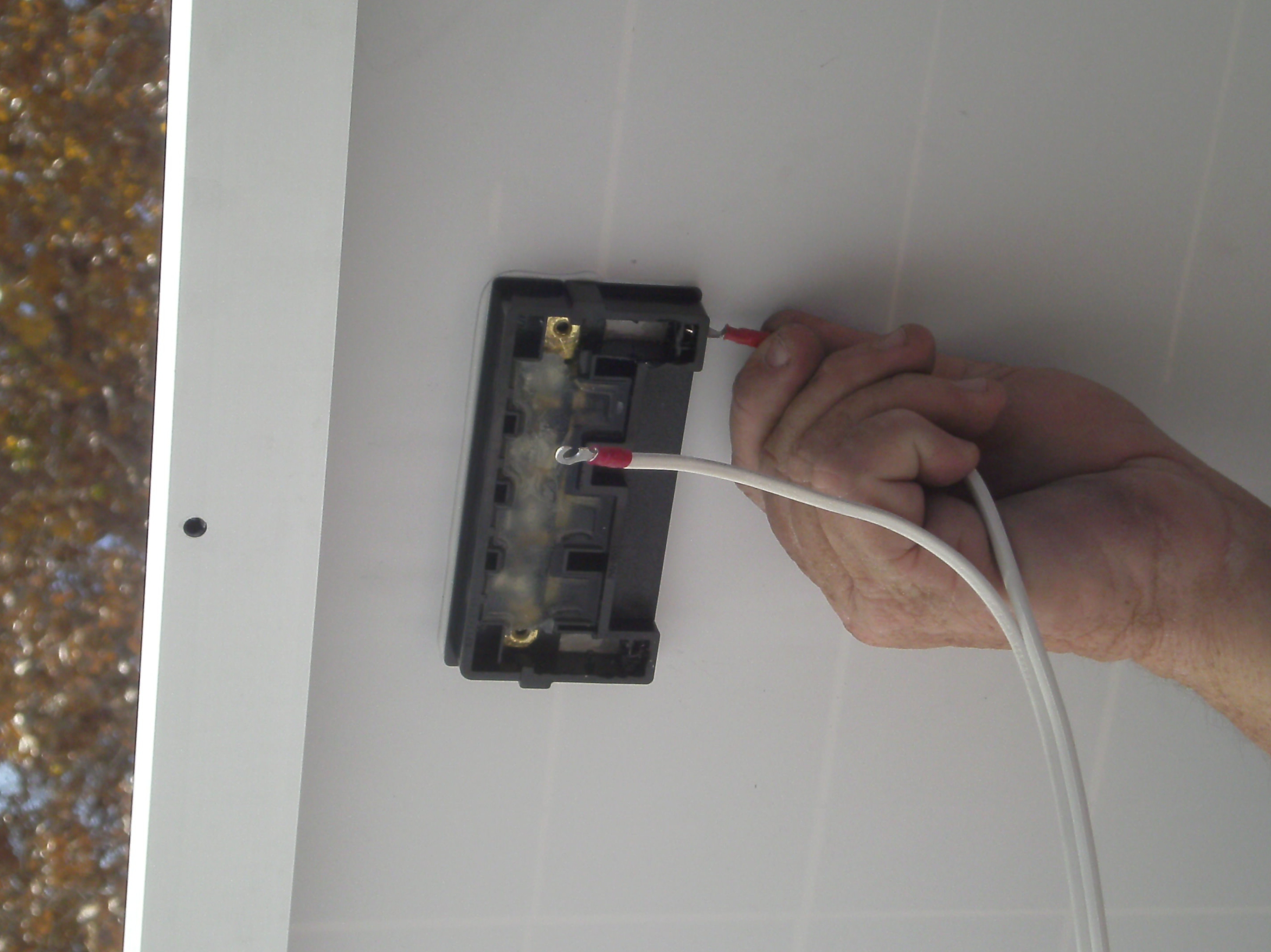
Underside of the solar panel
He then covers the connectors and wires with RTV, which you know all about because you read the second paragraph very carefully. He replaces the little black plastic cover on the box.
The white wire runs to the crossbar of the roof rack.
Well, it doesn’t actually run. It goes to the crossbar. Not goes as in moving from one place to another, it starts at the . . . Oh, never mind. Bill asks for some duct tape. All I have is neon green duct tape. He globs some RTV onto the wire and puts the neon green duct tape over it all to hold the wire to the back of the solar panel. Now stop skimming! Focus!
Bill reads my mind which is not especially difficult to do, given my screwed-up face. “Don’t worry. I’m going to paint it white.” He spray paints and looks down at me for approval. I approve.

The wire must be secure to prevent flapping when the PTV is on the highway.
Next Bill brings the white wire along the crossbar, securing it with plastic ties.
The wire enters the PTV through the door. The door closes easily on the wire, as the spongy trim compresses.

See the little white wire running into the PTV? See the neon green duct tape painted white? See the tree in the window?
Now you know why it is important to have flat wire!
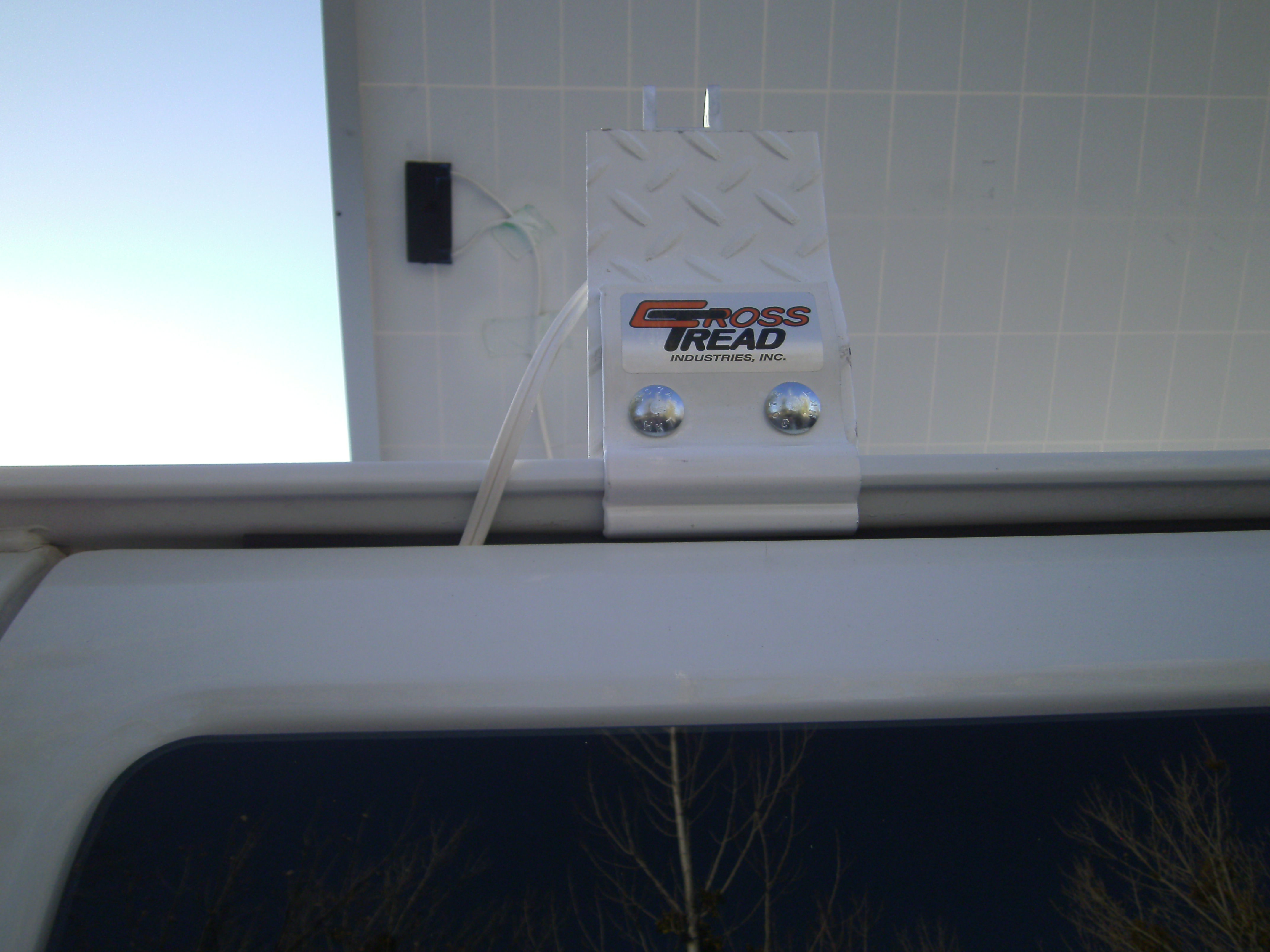
Wire from roof rack through closed door. Duh.
Isn’t this fascinating?
The wire runs . . . well, whatever . . . to the solar charge controller mounted on the battery box. (See Nov. 30 slideshow.) Bill climbs down off the roof. I hold the ladder.
Kathy, who has many wonderful qualities not the least of which is being slim and tiny, crawls in between the bench seat and the battery box/inverter/controller area, and connects the temperature sensor wire from the interior of the battery box.
Bill picks up the remote meter and pushes buttons.
The three of us ooh and ahh over the digital window. “Wow! It’s up to ten amp hours!” “And the panel isn’t even pointed at the sun!” “The PTV’s temperature is 73 degrees!” “The batteries’ temperature is 66 degrees!” “Let me get a picture of that!”
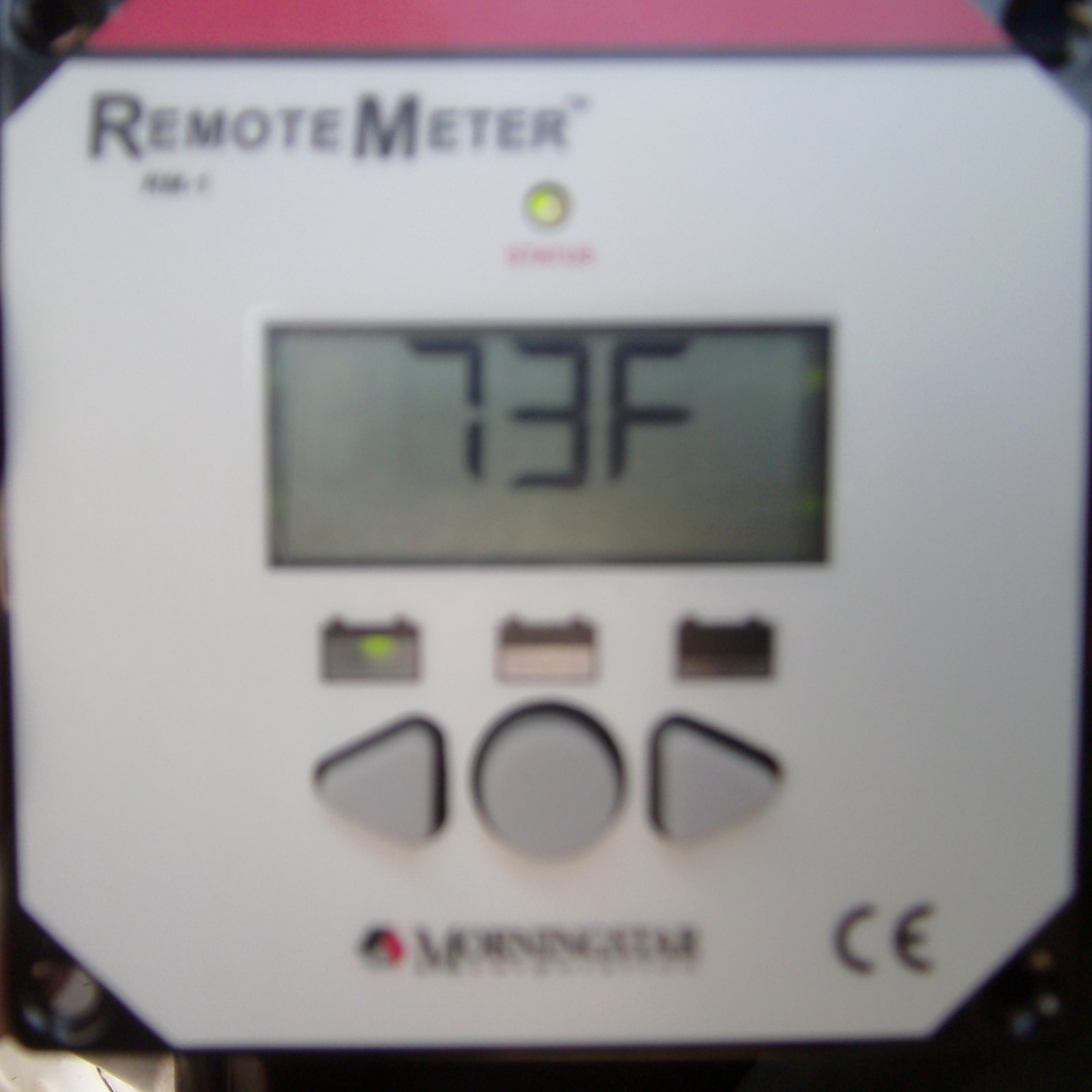

You get the idea. (We are very happy with the results.)
For the finishing touch, Bill climbs up with a spray can of Valspar anti-rust white paint and sprays the four edges of the rack supports that were sawed off previously.
I hold the ladder.
rvsue
P.S. from Spike . . .



 rvsue and her canine crew